Monday, February 22, 2010

Its all about the head

What a crazy, wild looking fish. The Giant Snakehead. By name by nature.
The first time I sore these weird looking things is still stuck in my head. Standing on a small bridge over looking the waters of a small dam in Hong Kong. It was closed season so no fishing this day. At my feet there were four Snakeheads harassing bait into a tight ball. Three would round them up and one would cut into the ball and rip a few baitfish. The other three would clean up on the wounded fish. They were roofless.
Two weeks latter and the season now opened I was back with a spin rod and a few small poppers. The hit was hard but the fight was disappointing. But if its all about the take than these things win.

They really hit hard.

Monday, February 15, 2010

Kung hei Fat Choi

Happy Chinese New Year, or something along those lines

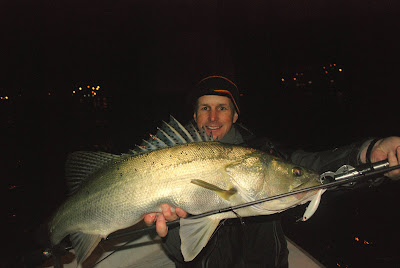
They talk about the lead up to the Chinese New Year, Lunar New year, or the Spring festival as peak season for the Sea Bass in Hong Kong. It is commonly called the "lunar New year", because it is based on the lunisolar Chinese calendar. The festival traditionally begains on the first day of the first month in the Chinese calendar and ends on the 15th; this day is called the Lantern Festival. That's a bit to get your head around if you're not Chinese. For us expats over here the holidays started on the 13th February this year.

Why am I going on about dates and what not's about this New Year period. Well because it changes each year depending on the lunar cycle. This lunar cycle must have something to do with the Sea Bass in these waters. In January this year around the same lunar cycle I found myself doing battle with a beast of a Sea Bass, a month latter another battle with a beast of similar proportions. Last year was the same but I was new to this species.

So if you are looking at a stop over in Hong Kong and its around this New Year festival time, pack a spin rod and some lures. You just might find yourself having your own battle.

Let's see what next months lunar cycle holds.

Friday, October 23, 2009

What Jerk ??????????

Its not too often you find a lure that is super cheap and catches a heap of fish. I was put onto these by good mate Chris Cleaver a few years back. It was just one of the many topics that came up after spending 17hr in a car driving up to QLD. Chris’s story went something like this, don’t quote me as some points many be wrong as it was a few year back now.
“The Jindavin Jerk was one of my go to lures when fishing the rocks”
“What Jerk?” I quickly replied.
“From Big W, the Jindavin Jerk. By far the best hardbody lure for the stones, and only $5. When ever Big W got a shipment in, they would all be gone within a day or two. It was a like our own little competition in seeing who could get them before the others found out they were back in stock”.
“What was so good about them?” wanting to know more about this cheap fish catching lure.
“They were the perfect size and shape. You would have to upgrade the hooks and rings as they were crap but the action was just right. It had a tight wiggle that sent the Bonito, Salmon and Rat King into a frenzy”.
Trying to get as much info out of him as I could “What colour did you find the best”.
“They came in a few different colours but only two worked a treat. The Green mackerel colour and the Mullet colour were the ones you needed to have”.
So with this information in the back of the brain I found myself in Big W. What, there were heaps on the shelves, like 20 or more. Feeling like a little kid in a toy shop I had them all over the floor looking for the two colours Chris mentioned. There were about 12 in the two best colour all up so I grabbed them all. And the best part was they were on sale, yep only $3 each.
That night they were upgraded with owner hooks and split rings ready for the next day on the rocks.
A week latter I was down on my local rock platform spinning for a few pelagic species. There were 3 other guys already fishing and had not caught a thing. You wouldn’t believe it but the first cast I hooked up. The shock on the face of the three guys fishing was priceless. A Bonito around the 2 ½ kilo mark was washed up onto the rocks and into a large rock pool. After a few quick photos the fish was unhooked and released to fight another day.
Two cast latter I was in again, another bonito around the same size, it was photographed and released also. This was to be the norm for the next hour or two. Unsure how many were caught that day but the Jindavin Jerk was making a good name for it self.
The other three guys were high speed spinning metals and only caught two fish between them. They were also in shock that in this day of high end Japanese lures, A $3 lure could be so affective.
I was too.

Tuesday, June 16, 2009

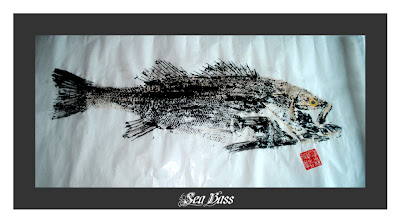
Gyotaku Fish Printing

Attention to detail is what makes gyotaku prints so special, something I haven’t mastered YET. I hope to over the next few years master this process.
On a white background, the fish is painted black and the print is transferred. The print itself is then hand-colored using watercolors or colored pencils.
In Japan the tradition of fish printing, or gyotaku, goes back to the 1800s, when fishermen began using ink and paper to record their catch. Sounds like a great way to remember those special fish

These are the steps I followed, they are a cut and paste piece from

http://freshaquarium.about.com/gi/dynamic/offsite.htm?zi=1/XJ&sdn=freshaquarium&cdn=homegarden&tm=43&gps=144_29_1259_640&f=00&su=p284.9.336.ip_p812.0.336.ip_&tt=2&bt=0&bts=0&zu=http%3A//bluewaterfishrubbings.com/myo.php

1-Cleaning Your Fish
Scrub your fish gently with some detergent, lemons, or vinegar; to remove all of the dirt and slime from the fish. Be careful not to damage any of the scales or fins. Avoid letting the fish soak in water or it may take a long time to dry.
Blot dry the fish with some paper towels.
Place the fish on a table covered with old newspaper or cardboard.
Gently stuff the gills, mouth, and vent of the fish with small pieces of paper towel to prevent leaks. If the fish's insides have been removed, gently stuff the belly with paper towel until it is firm.


2-Pinning (This step is not absolutely necessary)
Place your fish on a piece of cardboard or rigid foam board.
Spread each fin out as far as it will go and pin it to the board.
Gently brush the fish from tail to head with a paintbrush to help raise the scales, but try not to remove any.
Allow the fish to dry for 1 to 2 hours. This process can be sped up by placing the pinned fish in a refrigerator. (Do not put the fish in the freezer!) You can tell when the fish is dry enough to print by removing a few pins. If the fins don't move you're ready! If the fins move, replace the pins and wait another 15 minutes or so.
After the fish is dry, carefully remove all of the pins.


3-Inking
You can usually make at least 6-10 rubbings from a fresh fish. You can use 1 color or many colors to make a print. It is best to start off printing in 1 color and then progressing to many.
Place the fish on a clean paper towel.
Open your paint containers and have your brushes ready. Paint the fish with a thin layer of ink, brushing from tail to head. Paint the body of the fish first and the fins last because they dry faster. Try not to apply too little or too much ink to the fish. Applying too little ink will result in a very weak print. Applying too much ink will result in an unsightly blob. Do not paint the eye of the fish, it does not print well.


4-Pre-Print Clean Up
Transfer your inked fish to a clean paper towel. Wash and dry your hands. Look for blotches of ink on the paper towel and board surrounding your fish. Cover the ink blotches with pieces of clean paper towels. You don't want ink smudges on your print!
A clean table is a must before printing!


5-Printing
Take out a sheet of printing paper. The paper included in the kit is newsprint. Rice paper is the nicest when you get really good. A flexible absorbent paper is best for fish rubbing.
Hold the paper a few inches above the fish and adjust the paper to the angle you want your fish to appear on the paper. Carefully lay the paper on the fish. Leave the paper wherever it falls; do not move it or your print will get smudged.
Place 1 hand on the fish's belly to hold the paper still. Gently rub the rest of the fish with the palm of and fingers of your free hand. Try to "see" the fish with your fingers. Rub everywhere on the fish's body but try not to rub the same place twice to avoid smudges. The paper will wrinkle some but that is how you can tell a real fish rubbing!
When you feel you have finished rubbing; gently pull the paper away from the fish. You've made a Gyotaku!
Study your rubbing. If you see a blank spot you probably didn't rub the fish in that spot; if you see a smudge you probably moved the paper a little. Don't worry! Be happy! You can master these points on your next rubbing.
If you are going to make another print with the same color re-ink the fish now. If not, wash your fish and wipe it clean before re-inking.
Set your rubbings in a safe place to dry. Paint in an eye with the small paintbrush and sign your name.


25-7-09


Two new prints using silk. A Sea Bass from the local wet market for $5Aus was the fish used. Hope to soon print a BIG Hong Kong Sea Bass


Monday, June 8, 2009

Micky Ts LBG style


Rain, rain and more rain. I snuck back to Australia for my Dad's 70th with out him or Mum knowing. Well anyway after the birthday party it was time to fish. Wife free and Kid free for a week. Sleep was not on the cards. Didn't take long before the phone was ringing as friends found out I was back down under. Jabba (Andrew Burke) rang just as I was walking out from two days on the rock down the south coast. Things had been slow with a few rat Kings and Bonito.

"Bla, Bla, Bla heard you were back and are looking at going fishing. Im going up the coast for a day trip are you keen"

"You bet, what time, where and how?"


Well later that night I was in a car with Jabba and Del who we picked up in Sydney. Having not seen Jabba for a few years there was lots to catch up on. Plus it was the first time I have met Del and chatted. We soon worked out we had fished the rock together many years ago and landing Marlin off the rocks the same day.

We pulled the car into the car park at 4.30am and were pleased to find it empty. A quick power nap and we were on our way out to the rocks before the sun poked its head up. Baits were easy to come by until the Tailor moved in. They made short work of any bait hooked plus the jig they were on. After a while they moved on and we were able to set live baits out with hassle free drifts. Things were slow to start with but fish were getting hooked and some landed. By 2pm we had a Mack each but that was about to change. As the afternoon shadows started to hit the water the place came alive. In the next 2hr there was a bait eaten I would say every 10-15min. Andrew hooked into some thing that took alot more line than a Mac should. On 6kg there was not much he could do but just watch and enjoy the fun. Then after a screaming run the hook pulled.


The Mac's were still around to play games with and a late afternoon hook up made for a great way to finish a quick trip back to Oz.